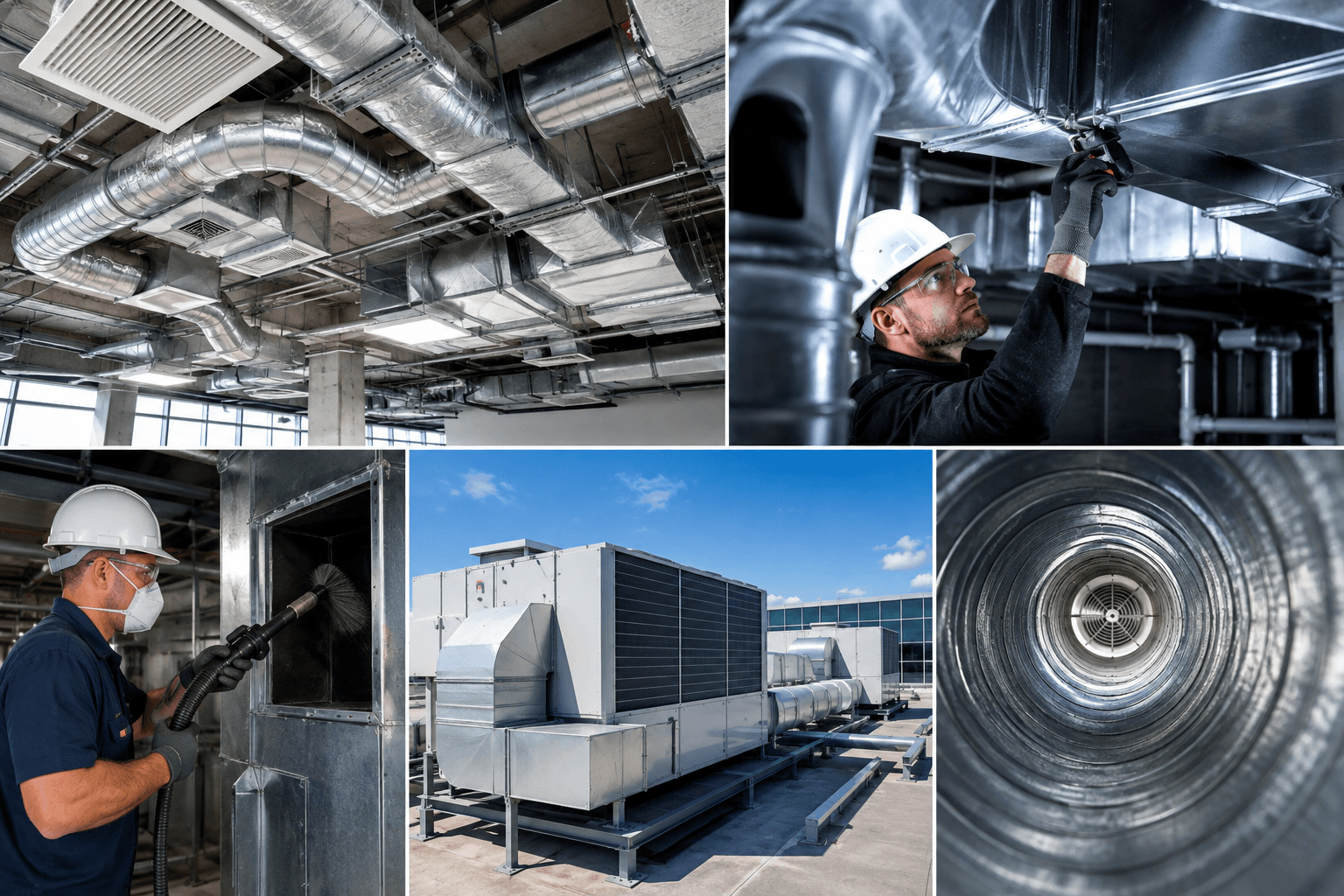
When it comes to managing modern facilities, maintaining indoor air quality and ensuring energy efficiency are deeply interconnected with regulatory compliance. In Australia, the benchmark for safety and performance in ventilation systems is governed by the Australian Standard AS 4254. Understanding how this standard impacts your building is the first step toward maintaining institutional-grade health and safety.
What is AS 4254?
AS 4254 outlines the strict manufacturing, performance, and installation requirements for air handling ductwork. It is divided into two primary sections that facility managers must be aware of:
AS 4254.1 (Flexible Ductwork): Covers flexible ducts, ensuring they maintain material integrity, are properly supported, and do not sag or restrict crucial airflow over time.
AS 4254.2 (Rigid Duct Systems): Dictates the construction and structural soundness of rigid sheet metal or glass-fibre ductwork used in large commercial assets.
The Compliance Landscape: NCC Section J
Compliance with AS 4254 is mandated under Section J of the National Construction Code (NCC). To meet these strict Australian standards, your HVAC infrastructure must hit specific benchmarks, including:
1. Thermal R-Values: Proper insulation thickness is mandatory to stop thermal bridging and lower energy consumption in conditioned spaces.
2. Duct Air Leakage Testing: Systems must be sealed according to designated leakage classes. High leakage rates force fans to work harder, degrading your system's overall efficiency and increasing utility costs.
3. Fire Hazard Property Testing (AS 1530.3): Materials used within the duct network must pass stringent fire safety tests to verify low flammability and smoke-development indices.
Why Compliance Matters for Building Health
A compliant duct system does more than pass audits. It actively protects your occupants. When flexible or rigid ducts are improperly sealed or lack a continuous vapour barrier, moisture can seep into the system. This creates a breeding ground for biological contaminants, degrading your indoor air quality index (AQI) and creating long-term hygiene hazards.
Furthermore, sagging or uncertified flexible ducts restrict airflow, preventing your Air Handling Units (AHUs) from properly filtering and cycling fresh air through your zones.
How AirDuct HVAC Secures Your Facility
Ensuring your building meets every facet of AS 4254 and NCC compliance requires precision mapping and specialized expertise. At AirDuct HVAC, we turn traditional maintenance into a data-driven strategy through our comprehensive building health framework:
High-Fidelity Site Audits: We inspect your flexible and rigid ductwork networks to identify leaks, structural deficiencies, and insulation degradation.
Mechanical Decontamination: Our certified technicians restore your supply, return, and exhaust ductwork back to its original hygiene and airflow specifications.
Continuous Intelligence: Through our AirDuct AirSense platform, we track real-time air quality metrics to ensure your compliant system stays functioning optimally.
Audit-Ready Certification: Once inspections and remediation are complete, we deliver digital compliance reports and official HVAC certificates via the AirDuct Compliance dashboard, ensuring your business maintains a 99% compliance pass rate.
Don't wait for your next compliance audit to discover hidden ductwork deficiencies. Contact the specialists at AirDuct HVAC today to book your comprehensive commercial HVAC health check.