HVAC Hygiene Services Sydney: Why "Clean" Isn’t the Same as "Compliant"
When facility managers evaluate building maintenance, visual cleanliness is often treated as the primary benchmark. If supply diffusers look dust-free and plant rooms appear tidy, it is easy to assume the ventilation system is functioning safely.
However, in commercial HVAC systems, a surface that looks "clean" can still harbor microbial contamination, mold spores, and airflow blockages that violate Australian health and building standards. Understanding why professional HVAC hygiene services in Sydney go beyond basic dusting is critical to protecting occupant safety and managing facility risk.
Visual Clean vs. Microbial Compliance
Standard janitorial cleaning focuses on surface appearance. In contrast, HVAC hygiene focuses on the biological and mechanical integrity of your heating, ventilation, and air conditioning infrastructure.
In Australia, commercial HVAC compliance is primarily guided by AS/NZS 3666 (Air-handling and water systems of buildings - Microbial control). This standard sets strict benchmarks for:
1. Air Handling Unit (AHU) Hygiene: Keeping cooling coils, condensate trays, and internal insulation free of biofilm, legionella risk, and fungal growth.
2. Duct Interior Conditions: Preventing dust and bio-load accumulation inside supply and return air ducts.
3. Filter Efficiency & Sealing: Ensuring filtration systems actively strip airborne particulates without bypass leaks.
A system can look spotless from the hallway while harboring heavy microbial growth inside coil fins or duct insulation lining.
The Risks of Superficial HVAC Maintenance
Relying on superficial cleaning rather than comprehensive hygiene services leads to several operational problems:
· Indoor Air Quality (IAQ) Degradation: Mold spores and fine particulate matter circulate continuously through occupied office spaces, causing headaches, fatigue, and respiratory irritation among staff.
· Increased Energy Costs: Biofilm build-up as thin as 0.5mm on cooling coils acts as an insulating barrier, forcing compressors and fans to consume significantly more power to achieve set temperatures.
· Regulatory & Liability Exposure: Failing to meet AS/NZS 3666 standards leaves building owners and facility managers open to tenant disputes, WHS breaches, and failed building audits.
What True HVAC Hygiene Encompasses
Specialized hygiene restoration involves a systematic, engineering-backed approach:
· Coil Decontamination: Applying non-corrosive, microbial treatments deep into AHU coils to clear biofilm and restore heat transfer efficiency.
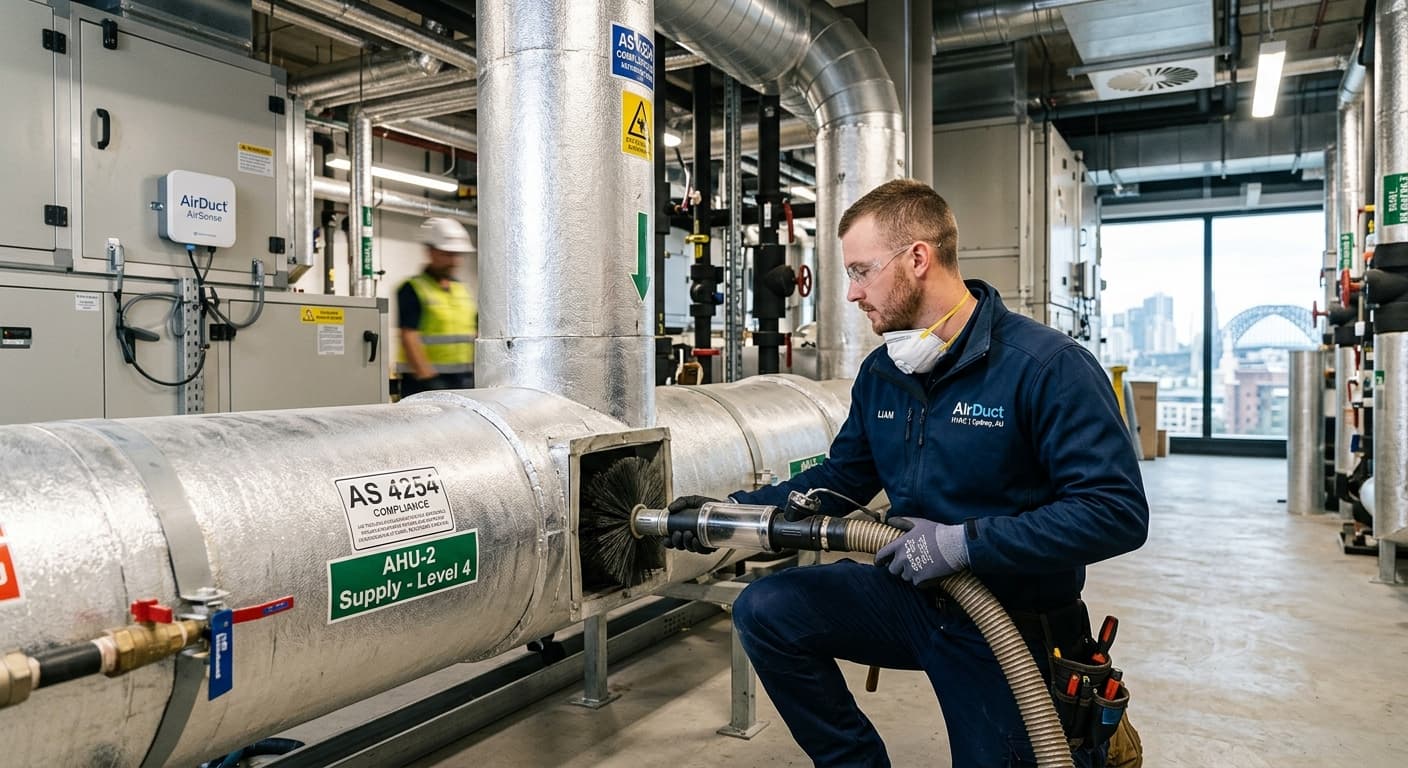
· Ductwork Cleaning & Sanitisation: Utilizing negative air machines with HEPA filtration alongside mechanical brushes to strip duct walls clean.
· Airflow & Sensor Baselining: Verifying that clean components translate to improved static pressure and balanced airflow across all building zones.
Partner with Sydney’s HVAC Hygiene Specialists
Maintaining compliant building health requires continuous oversight and verified technical execution. By investing in professional HVAC hygiene services, commercial facility leaders across Sydney ensure their buildings remain safe, energy-efficient, and fully compliant with Australian standards.
Contact AirDuct HVAC today to request an asset audit or discuss custom HVAC hygiene programs for your facility.